
Electric motors provide the mechanical power that keeps industrial equipment running. However, many applications need more than a motor operating at one fixed speed. A conveyor may need to move at different rates, a pump may need to respond to changing demand and a production machine may require controlled acceleration and deceleration.
This is where a Variable Frequency Drive (VFD) works with an electric motor. The motor produces the movement while the VFD controls how that motor operates according to the needs of the application. Understanding their relationship helps businesses make better decisions when planning industrial equipment and upgrades.
What Happens Between a VFD and an Electric Motor?
A VFD sits between the electrical supply and the motor. It receives incoming AC power, converts it into DC through a rectifier and then uses an inverter to produce controlled AC output for the motor.
The important part is that the VFD can adjust the output frequency and voltage. This changes the speed at which the motor’s magnetic field rotates and allows the motor to operate at different speeds.
For example, a motor connected directly to a fixed-frequency supply generally runs close to its designed operating speed. When connected to a suitable VFD, the motor can run slower or faster within its permitted operating range.
Businesses looking for an electric motor supplier in UAE should consider how the motor will operate with the intended control system, rather than treating the motor and drive as unrelated purchases.
How the VFD Changes Motor Speed During Operation
Motor speed is closely related to the frequency supplied to it. For a standard AC induction motor, synchronous speed depends on supply frequency and the number of motor poles.
When the VFD reduces output frequency, the motor’s magnetic field rotates more slowly. The motor follows this change and operates at a lower speed. The drive also adjusts voltage in relation to frequency to maintain suitable magnetic flux and torque characteristics.
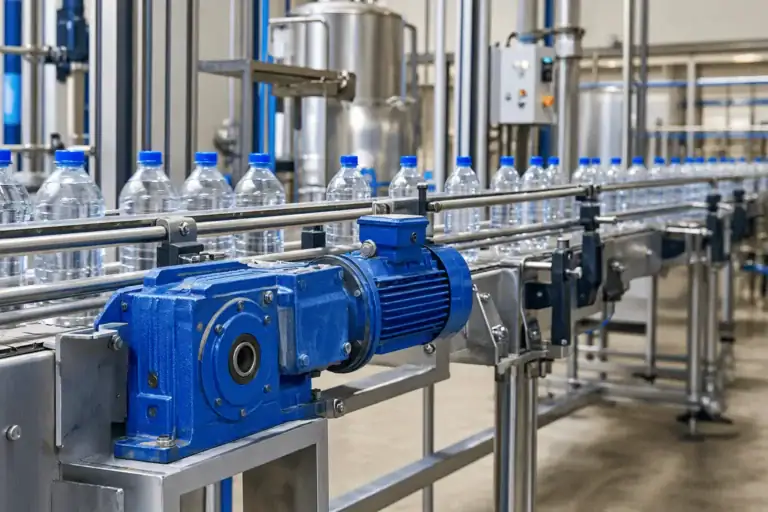
Consider a conveyor system that handles products at different stages of production. It may need a slower speed when items are being inspected and a higher speed when moving products to the next station. A VFD allows the motor speed to respond to these requirements without relying only on mechanical adjustments.
A suitable VFD supplier in UAE can help businesses review drive options based on the motor and the actual operating requirements.
What the Motor Does When the VFD Changes Its Output
The VFD controls the electrical power delivered to the motor, but the motor still has to produce the torque needed to move the connected equipment.
This relationship becomes important when the machine load changes. A lightly loaded conveyor may need less torque than one carrying a heavy product load. A pump operating against changing system demand may also require different operating speeds.
The drive must be suitable for the motor and the load. Its control method and current capacity need to support the required operating conditions. Simply matching the VFD and motor by kilowatt rating does not always establish that the complete arrangement is suitable.
When reviewing electric motor options for industrial applications, businesses should consider rated voltage, current, frequency, speed and duty information together with the drive specifications.
Where VFD and Motor Coordination Makes a Difference
The relationship between a VFD and an electric motor is particularly useful in applications where operating speed needs to change.
- Pumping systems: A VFD can adjust motor speed to respond to changing flow or pressure requirements when the pump and system are suitable for variable-speed operation.
- Conveyor systems: Speed can be adjusted to coordinate product movement between different production stages.
- Fans and ventilation: Motor speed can respond to changing airflow requirements instead of relying entirely on fixed-speed operation.
- Mixing equipment: Controlled speed can help match the motor’s operation to different stages of a mixing process.
In these applications, the benefit comes from coordinating the drive, motor and machine as one operating system. A VFD for industrial motor speed control should therefore be selected with the driven equipment and its operating pattern in mind.
What Should Be Checked Before Connecting a VFD to a Motor?
Before installing or upgrading a VFD and motor combination, review the following information:
- Motor nameplate: Check rated voltage, current, power, frequency, speed and connection details.
- Power supply: Confirm the available input supply and the VFD’s required input configuration.
- Load characteristics: Identify whether the application requires constant torque, variable torque or frequent changes in load.
- Operating speed: Establish the required minimum and maximum speeds and confirm that the motor can operate safely across that range.
- Cooling and installation: Check the motor’s cooling arrangement, ventilation and installation conditions, particularly when it will operate at reduced speed for extended periods.
- Control requirements: Determine whether the application needs basic speed adjustment, external control signals or communication with a larger automation system.
These checks help avoid treating the VFD as a simple add-on. The motor and drive need to be suitable for the same operating conditions.
For businesses reviewing a variable frequency drives (VFDs) supplier in UAE for industrial applications, providing the motor nameplate and application details can make technical discussions more useful.
Likewise, working with an experienced electric motors supplier in UAE for compatible motor options can help when specifying a motor for a new VFD-controlled installation.
Bringing the Motor and VFD Together
A VFD and electric motor perform different roles, but their operation is closely connected. The drive regulates the electrical output while the motor converts that electrical energy into mechanical movement. Together, they allow industrial equipment to respond to changing operating requirements.
The most suitable combination depends on the application, motor characteristics, load and required speed range. Businesses planning a new installation or upgrading an existing system should assess both components together before making a purchase.
Pokhara Motors supplies industrial electric motors and VFDs for different application requirements. Businesses can explore its electric motor range and VFD product range to review available options.
Contact Pokhara Motors
UAE (Head Office)
Phone: +971 6 566 8176 | +971 6 566 8076
Email: sales@pokharamotors.com
Saudi Arabia
Phone: +966 53 965 4113 (Dammam) | +966 53 038 0546 (Jeddah)
Email: info@pokharamotors.com
Qatar
Phone: +974 6616 3852
Email: salesqa@pokharamotors.com
Oman
Phone: +968 97225517
Email: oman@pokharamotors.com
Website: https://pokharamotors.com/